A Producer's Guide to Stardom
Producer. Musical Engineer. Beatmaker. There are infinitely many terms that can be used to describe the craft of production, but none of them encompass its true meaning. A word that does? Musician. That’s right, producers are musicians. They’ve an understanding of music theory - most often with far greater proficiency than the musicians for whom they produce - they create hundreds of times as much music as your typical artist, and, because, far from common belief, auto-tune isn’t an automatically applied setting, they create the voice that their audience recognizes. Great producers are capable of dissecting music down to an atomic level; and as music converges towards electronic beats, with the accelerated rise of hyperpop leading the frontier next to rage music, this is the perfect chance for producers to make themselves seen. It’s now or never. Now of course this isn’t to say that there aren’t famous producers - in fact, musicians like Metro Boomin, who rose to higher ranks than the majority of the artists he works with, are the perfect example of the places production can take an artist. But all this flattery of the profession won’t make them famous, so what can? Firstly, we must recognize the issue - whilst producers shine in a number of abilities, they lack in a specific aspect, whereas performers thrive in it: the hunger for fame, the obsession with recognition. They strive for success, but not recognition. And whilst for some it may come down to a matter of not taking an interest in stardom, to many this won’t be the case. So if you’re a producer striving for global celebrity, or simply someone who understands the benefit of viralizing these professionals, imagine the following writing as a Jane Fonda style workout video, a step-by-step guide for achieving your goals, one ab exercise at a time.
For one, it’s key to recognize the impact the distance viewers visualize the musician from - a pivotal characteristic of performers is, believe it or not, that they perform. They present themselves in front of an audience, a global audience, and they perform. This enables viewers to develop a parasocial form of attachment to them, thus investing energy into them, thus building their platform and their image. This proximity to the crowd - both physical and digital - lacks in production, limiting their exposure. It’s the same concept as the lead singer getting most of the fame in a rock band, except here the distance between the audience and the instrumental is even further away, preventing most from developing a personal connection to the artists beyond appreciation for their work. So naturally, the solution to our issue has to be to close the gap.
The physical aspect of the ‘gap’ is easy to close - as we discussed, a performer’s greatest strength is their ability to perform. So why shouldn’t producers imitate that? What reason makes it such that producers leading projects played by millions upon millions shouldn’t display their music first - hand? This displays not only their work, but their mastery of the craft. More than that, it leverages a producer’s greatest strength: their range. Recall the example of a rock band - in most cases, a vocalist will only present their work through one fountain. In contrast, these musicians can work on a limitless number of projects, branching multiple genres, and therefore, multiple audiences. This allows for incredibly diverse and rich shows, which should aim to create real everlasting experiences by venturing into unique and playful concepts, maximizing viewer engagement and finally opening the door for a producer to be recognized as his own artist, not in regards to his collaboration with others.
The digital aspect is where it becomes harder - the reason for that? Well, consider the metaphorical gap. It is now a metaphorical sinkhole. The distance can never be closed digitally, as a screen will always stand in the way of such actions. Therefore, how could a producer build a relationship with the audience if he can’t rely on proximity? Here, the priority shifts to their brand identity. Who they are - not their music, not their shows - but them. Celebrities don’t gain that status without first creating a public image for themselves, be that a good or a bad one. Now, this isn’t meant to promote an anarchic form of living, simply to say that one won’t gain public awareness if the public isn’t aware of them, and therefore won’t build a digital following. Producers should constantly seek opportunities to expand their personality in the eyes of the viewers, be that through interviews; personal projects which display their abilities; or brand collaborations, a tool wielded intemporally by any public figure in entertainment, and which maximizes exposure via simple co - branding. All this goes to create an image of relatability and authenticity, in turn pushing potential fans to associate with their work and their persona to a more personal level. Needless to say, this isn’t a new promotional concept, and has existed since the dawn of the internet: it’s simply that this hasn’t been employed sufficiently in this niche of the industry, such that most can only name a select few figures within music production, if any.
However, regardless of physical or digital appearances, there is still one element to any notorious producer that mustn’t be overlooked. Some will call it a cliché, but most tend to forget that something doesn’t become a cliché without repetitively successful execution; that being said, the missing element is a producer tag. A producer tag is, and will always be, the most recognizable piece in a producer’s brand. The choice of tag is infinite, but there should be a very specific and curated selection to it - a memorable and distinctive phrase can have incredible conversion into artistic recognition, and is by far a producer’s strongest marketing tool. Something which sparks curiosity in listeners and identifies who you are can go a long way, often becoming the majority of these musicians’ brands. Iconic tags, be it a sentence, a word, or even a four - count start, become signature motifs used to identify their works, and are these artists’ form of marking their works, much like painters sign their pieces.
There shouldn’t be a difference in the ability a producer has to rise to fame in comparison to your typical global - phenomenon - after all, they are both musicians. There is no telling what the future holds - and can hold - for this profession, but personally, I expect a lot of change in the status it holds in society. Now we wait and see.
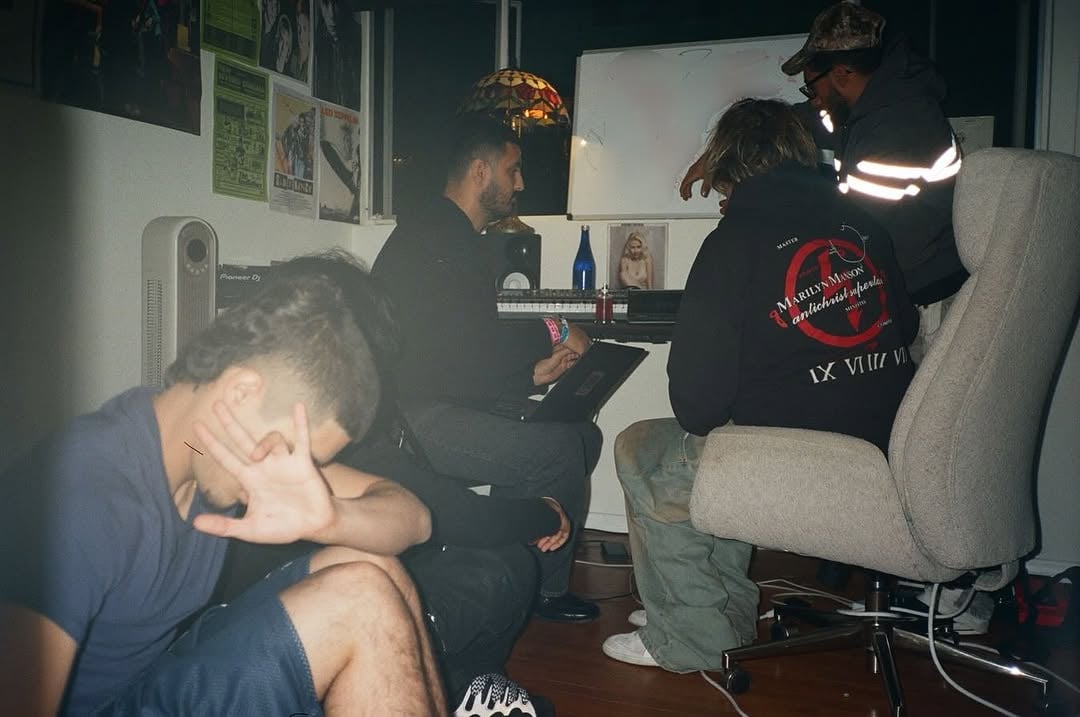
Photo credits: @wegonebeok on Instagram