
Boxing and Fashion: An Unexpected Relationship
In current times, looking at the way boxing and fashion are connected, we see haute couture’s influence on the gear worn by fighters more and more. From Dior to Chrome Hearts, designer labels are regularly present in the ring; but how did it come to be that the sport became a favorite of so many luxury labels, whilst being the precise contrast of the stereotypical concept of luxury itself?
Whilst the sport stems back millennia, there was very little development of its clothing until the 1900s, also referred to as ‘The Golden Age of Boxing’; in its early decades, the modern version of the boxing glove was released; and soon came with it the first models of fighting-specific shorts, particularly the iconic satin shorts with an elastic waistband (a valuable upgrade to the belt-fastened tights they formerly wore); and boots — which, while not identical, still share most features with their modern variants, particularly their prominent ankle-high fit. In the coming years, brands like Everlast would grow their reputation in the sport, and begin truly evolving equipment beyond its inefficiencies. For decades to come, garments would be replaced merely to maximize practicality in fights, and would never touch on any fashionable intent. This status was respected until 1973, when the sport had grown into huge fame within the entertainment industry, and Muhammad Ali wore a bejeweled robe gifted to him by Elvis Presley to multiple fights — however, this was yet to be a full bridge between the sports, as the robe was merely ring attire, and not an actual garment worn in a fight. But, given the limitless influence of Muhammad Ali, this created movement, and by the 80s, every athlete had brand partnerships, with their trunks featuring logos as a publicity technique, using their clothing for the first time for any purpose besides fighting.
But this still wasn’t a real bridge. Fashion wasn’t any more present than a number of logos on identical pairs of shorts, and the stylistic appearance of fighters was not relevant towards presence and publicity in the fashion world. It was rare that brand names beyond Adidas were worn, as boxing held a uniform-based existence. But as the years passed, trunks would come to a significant level of quality and design, and it wouldn’t be long until — in the early 2000s — fashion finally took notice of boxing. Collections emerged heavily centered around the unique gear, specifically its materials and silhouettes, but also around the rugged, beat-down aesthetic which boxing, and fighting in general, carries.
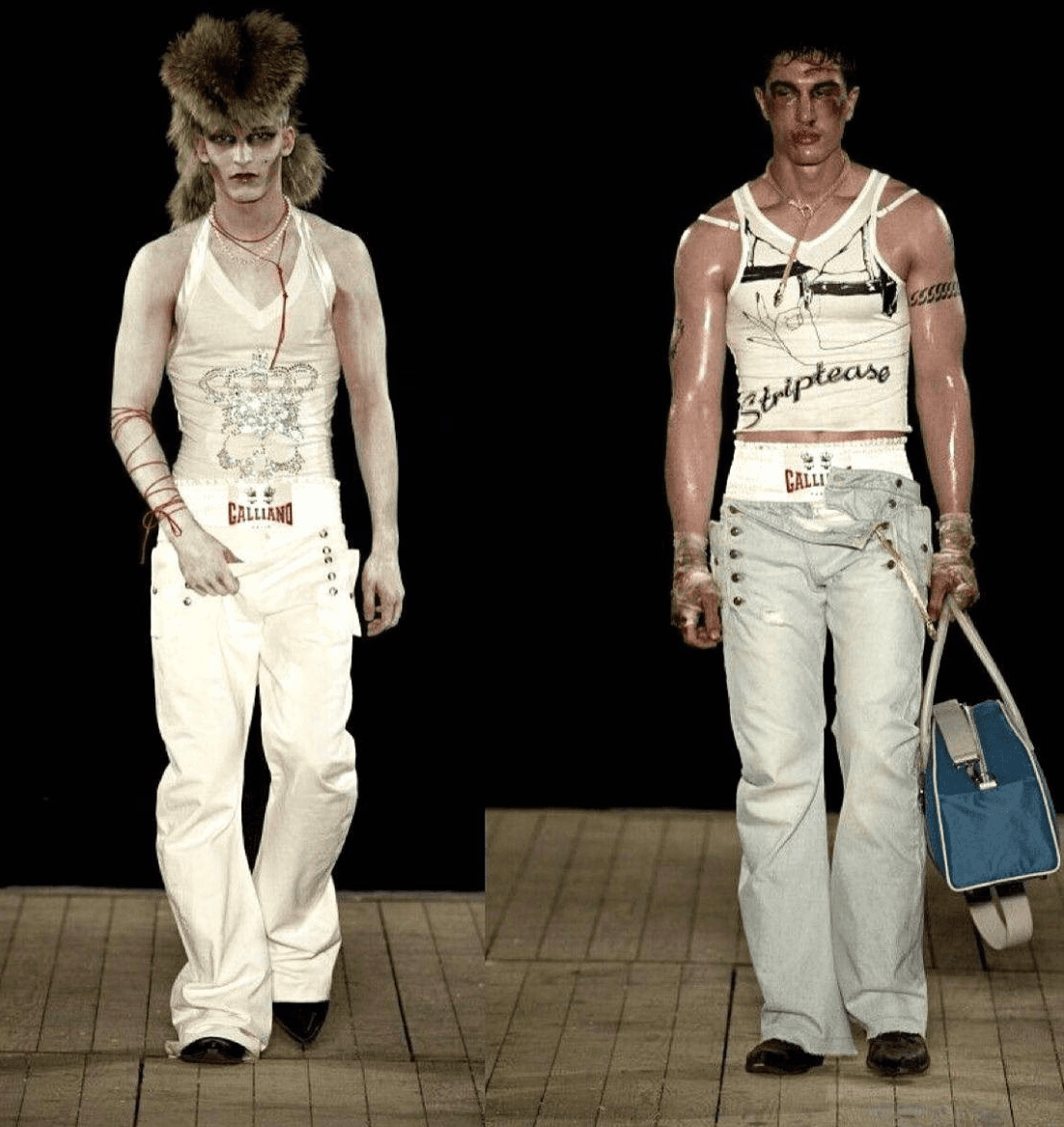
And finally the connection was established when John Galliano released his legendary Fall/Winter 2004 menswear collection, featuring jeans with a trunk-like elastic waistband, a concept whose existence prevails to this day globally in double-waisted jeans featuring that Galliano-inspired strap. More than that, it featured heavy distressing, whilst the models presented black eyes and bleeding noses, displaying how integration between boxing’s ‘counter-aesthetic’ feature of physical violence and a luxury label was done: by breaking norms of cleanliness and etiquette, and presenting the raw truth under a well-tailored collection. Later designers like McQueen and Lagerfeld would employ this same aesthetic, officially eternalizing the bond between the two worlds.
Since these days, boxing has continued its growth in fashion. Boxing shorts became a part of streetwear culture, and the high boots continuously appeared on runways, marking their presence through their unmissable silhouette. And of course, as any industry bond should be, this collaboration is mutual, with fashion influencing boxing as much as boxing influences fashion. It is becoming more and more common for designers to style fighters in custom apparel matching the brand identity: some simple, like Ryan Garcia’s Dior-embroidered shorts; some trendy, such as Stephon Fulton’s jorts and Timberlands fit, with one-of-one Timberland boots altered into boxing shoes; and some incredibly elaborate, such as Deontay Wilder’s Black Power armor, designed by LA-based couturier Cosmo Lombino and worn to his match against Tyson Fury.
This partnership is still one in growth, given that the true cultural clash began a mere 20 years ago — and it is undoubtable that we are yet to see the best of what’s to come; but whether this will emerge from an expansion of boxing-inspired silhouettes in fashion, or from the continued rise of custom garment creation by boxers, is the more uncertain question — and one we will soon see answered.