
Dancing to a New Cultural Era
In the mid-2000s, a new, never-before-seen instrument of gaming was introduced: a motion-controlled console. This came with the Wii in 2006, which immediately took shape as one of Nintendo’s best-selling products alongside their iconic Nintendo DS. Because of the console’s unique playstyle, video games for it adapted their style of movement, with many focusing on the party game genre — meaning video games designed to be brought out at parties, or any form of social gathering, for people to play together for short periods. One of these games was Rayman Raving Rabbids: TV Party, which presented multiplayer minigames perfect for socialization. Among these was Dancing with Dweebs, where each player would take on the digital form of a Rabbid (which, as the name suggests, is a rabid rabbit), and follow a sequence of dance moves on the screen, which were then emulated by the Rabbids. This minigame was a hit, and Ubisoft, its parent company, would take inspiration from it for a stand-alone line and, in 2009, would create Just Dance.
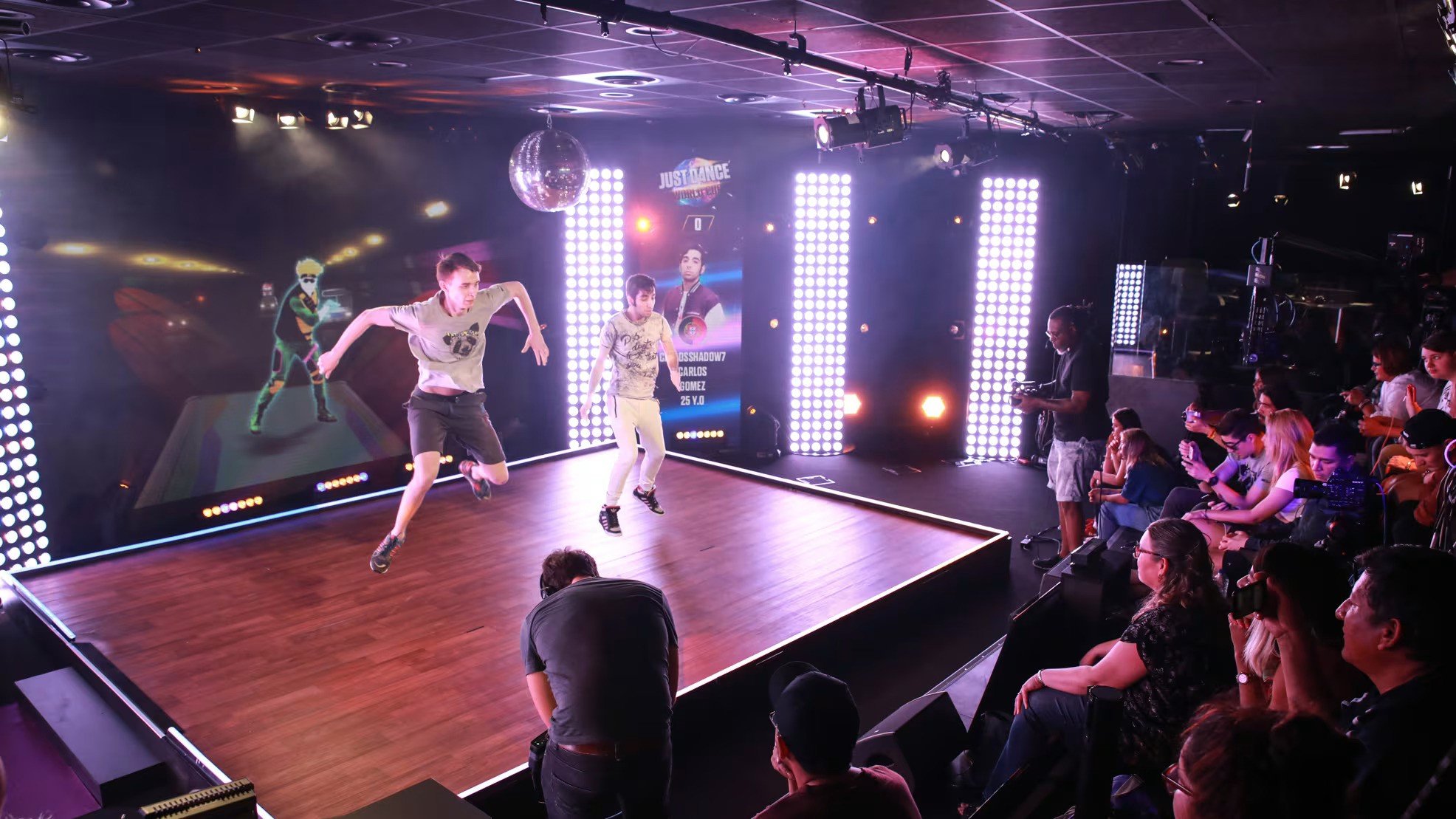
Just Dance is a game with an incredibly simple formula: dancing along to your favorite songs by following a set of dance moves on the screen. And that’s exactly why it worked, because simplicity meant mass appeal. Within a matter of months, it would become one of the best-selling video game titles worldwide, outselling the highest-budget productions of its time. This encouraged Ubisoft to release a second edition just a year later; Just Dance was now a fully realized franchise. For the next few years, its growth wouldn’t hit the brakes, expanding to all consoles carrying motion-sensing technology, a huge step forward from its platform exclusivity; and in 2014, it would become available on any smartphone through the Just Dance Now app. And in 2023, the choreographic prowess of the game’s players became an official Olympic Esport. But regardless of how much it has grown, we still don't know one thing — what made it the global hit that it was?
A great factor behind that was undoubtedly its inclusivity. From its introduction to the present day, one of the major drivers behind its development has always been the push toward accessibility for a broad market. The entire concept of a party game is that anyone can play it, regardless of age or skill, and find enjoyment in it. Just Dance doesn’t require prior knowledge of controls or memorization of choreographies; you learn by doing. And as of recent editions, dances catering to people with reduced mobility are always present, showing that strive to the fullest extent. This mentality of “everyone” was key to a major breakthrough in gaming’s cultural divide — where, due to stereotypical imagery and the propagation of gender norms, only a small niche seems to be allowed to truly enjoy or seek the benefit of video games. This game showed the world that one doesn’t need to be a computer junkie to enjoy a digital universe and marked a huge milestone in bringing more women into a male-dominated industry and hobby. The game had no norms or boundaries, making it the perfect center for diversity.
Beyond this, there remains one other great motive for Just Dance’s success — its movement parallel to pop culture. A key part of the game’s identity, and one that ties in with inclusivity, is that the diversity of musical genres which a player can choose from must be great, so that regardless of personal taste and background, anyone can scroll through the choices and have their eyes light up for a track they love. More than that, the variety of musical styles isn’t merely a factor fostering inclusivity, but an actor in spreading musical culture worldwide, cross-culturally. They achieved this by partnering with virtually every major record label, enabling their music, and hence their game, to retain relevance by evolving alongside music’s own evolution. By choosing music that is truly in demand, and which cultures are moving through, they were able to release new editions yearly, topping the charts every single time.
And because of its success, for a brief moment in history, we were all united. Maybe not politically, not religiously, not in a manner of ways. But in any country in the world, there were individuals, families, and groups of friends who would stand in front of a TV and, for a few hours, dance. And hopefully, through the melodies and moves, enjoy the uniting power of art, where no matter your background, you can find happiness and fulfillment in hearing it and performing it. In classrooms, in dance studios, in retirement homes: anywhere, with anyone, as a tool of improvement and exercise, as a tool of leisure, or most often, as a tool of both.
Photo Credits: Olympic Esports Series 2023