
The Meeting Point of Sport and Theatre
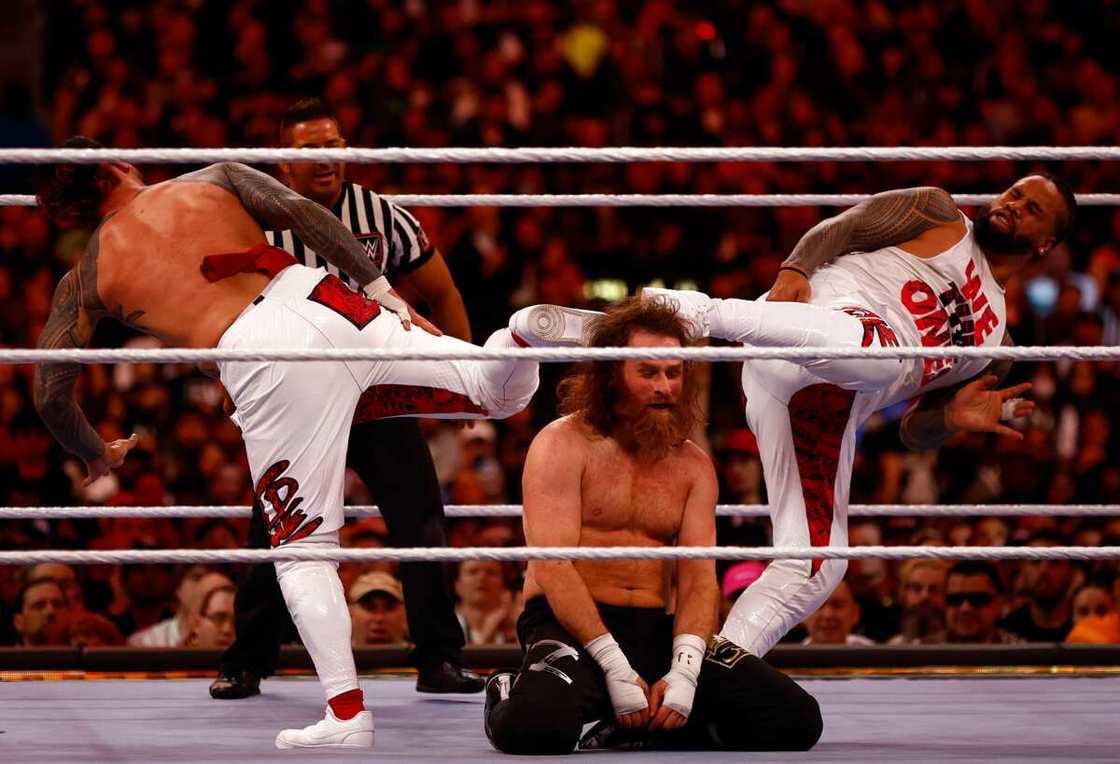
Imagine yourself in a wrestling arena. Specifically, pro wrestling. What immediately comes to mind? Is it the fighting? A specific fighter? Or is it the theatrics and drama performed? What often doesn’t come to mind, specifically for those who aren’t regular viewers, is its story. Pro wrestling is deeply rooted in its ability to create iconic franchise characters who don’t merely put on a show for a single night, but traverse deeply into the essence of storytelling, developing a plot and presenting real character development. But as the stereotype lies in labelling wrestling as staged, people misunderstand and overlook its entire existence, not as a sport, but as theatre — raw, uncut theatre, in front of a great live audience.
The storylines are driven by rivalries, a theme that reflects the competitive nature of the sport itself — considering that for millennia prior to its existence as a performing art, the grappling-based fighting style has been practiced worldwide. Yet, it delves much deeper than that. Themes of romance and loss are ever-present and continuously influence the unfolding of the tale; and beneath the so-called savagery of the physical altercation, the striking spandex costumes, and the melodrama compared to that of soap operas, lie profound teachings of morality — of good against evil. In this sense, the athletic theatre closely resembles superhero movies, both existing under the stereotype and negative connotation of ‘morality plays in spandex’.
What greatly differs it from its filmic counterpart is the reality of its danger. People are so focused on exposing the combat as fake that they brush over its technical and physical magnificence, and the near-perfect choreography wrestlers must maintain with the rigor of ballroom dancers to elude injury. It isn’t for no reason that a score of industry icons have turned into cinema stars over the years: they already carry all the physical prowess and stunt training required for the most daring feats; and therefore they need only be good actors, which many, naturally, are. Names like John Cena and Dwayne Johnson climbed to the top of Hollywood from a starting point in WWE — redefining the limits of theatrical prowess within pro wrestling, and defeating the cynicism placed on it by society, specifically by the art world.
Recently, in the same interview in which he now so famously ‘slandered’ ballet and opera, Timothée Chalamet was asked how WWE influenced his artistic evolution. He explained that he visualized it in a sort of ‘Greek theatre setting’, with each fighter carrying incredible depth in "deeply archetypal storytelling". But what he said next was, to me, what struck most deeply — "it’s not told in a pretentious manner. it’s not about cinematic shots, but it gets to a core thing". In most art forms, especially within the theatrics, the performances are, undeniably, pretentious. Phrases are spoken in extensively thought-out one-liners, all of which aim to maximize artistic value. In wrestling, the dialogue is improvised and the stunts real — its essence isn’t hidden behind ostentatious performances, but behind action and engagement with the audience — such that Chalamet referred to it as a guidepost growing up, his inspiration in creating and operating his characters all throughout his career.
The primal sport, carrying prehistoric roots, undoubtedly differs greatly from its professional variant; and by failing to understand that, a great deal of the public misinterpret its meaning. They take it for a fake circus act and ignore the roots it’s held upon. But to call it that is the same as calling cinema scripted — the terms are synonymous and need no pointing out. This doesn’t mean that everyone must enjoy it for the art form it is, merely that they should identify and talk of it as one, not as an attempt at deceiving people. Its acceptance into the art world is restricted only by the classist standards which are held in the artistic industry, the condescending belief system preventing art from becoming populist — an artificial exclusivity which must be surpassed in order to enable exposure to all art forms, and to accept professional wrestling for what it is, open-armed.
Photo Credits: WWE